Samsung’s Multi-Folding Phone Reshapes the Foldable Market
If you thought the foldable-phone era had plateaued with dual-hinge devices, think again. With the unveiling of Galaxy Z TriFold — the first widely released multi-folding smartphone — Samsung Electronics is making a bold bet: that consumers are ready for a device that folds not once, but twice. This isn’t a modest incremental upgrade — it’s a statement of ambition, a shot across the bow at rivals, and a test case for whether “tri-fold” can move from niche curiosity to serious product category.
In this post, I’ll break down the specs, strategy, competitive context, and the real-world questions Samsung now faces. Expect facts, hard takes, and no sugarcoating.
What is the Galaxy Z TriFold — and why it matters
The hardware leap
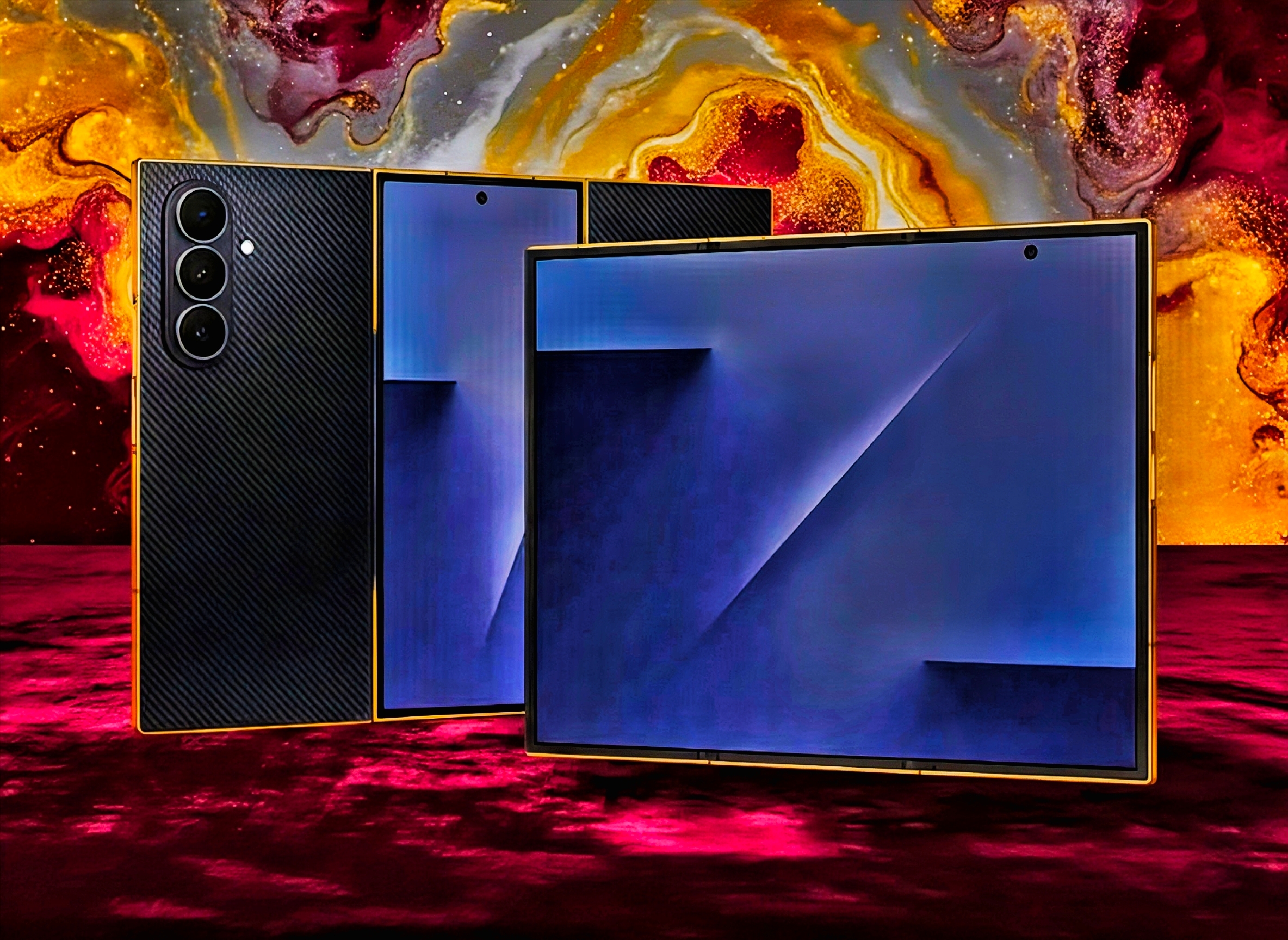
- The TriFold unfolds into a 10-inch (253.1 mm) Dynamic AMOLED display using three panels — a 25 % larger spread than the current dual-fold model from Samsung, the Galaxy Z Fold 7.
- Internally, it’s powered by the Snapdragon 8 Elite for Galaxy chipset, paired with up to 16 GB RAM and 1 TB storage.
- Battery is a 5,600 mAh three-cell system — reportedly the largest Samsung has ever packed in a foldable — offering all-day endurance.
- Photography and content creation get a serious boost: a 200 MP main rear sensor, ultra-wide and telephoto lenses, plus dual 10 MP front cameras (one on the cover screen, one on the main screen).
- Build-quality: inward-folding hinges, reinforced flexible-display technology, and a slim profile of just 3.9 mm at its thinnest — impressive for a triple-fold device.
In short: this is no gimmick. The TriFold represents a substantial engineering achievement — not just a bigger screen, but a full rethink of what a “phone” can be.
Official narrative — and Samsung’s bet
According to Samsung:
“The Galaxy Z TriFold showcases engineering mastery and is optimized for the unique demands of a multi-folding design.”
The company claims the device strikes a balance: portability when folded, and a large, immersive, productivity-ready display when opened. Samsung appears to expect the TriFold won’t become a mass-market volume driver — at least not yet — but rather to serve a niche: “customers who specifically want it.”
To some extent, it’s a showcase — a technological flagship designed to reestablish Samsung’s leadership in form-factor innovation, even if for now only a few will pay the premium.
Market context: why now, and what’s at stake
The foldable battle is heating up
Foldables have long been in flux. Dual-fold devices (like the Galaxy Z Fold line) have gained traction among enthusiasts, but the leap to tri-fold suggests manufacturers are trying to push foldables toward mainstream acceptance — or at least to expand what “smartphone” means.
For Samsung, this comes at a time when other players are pressing — and catching up.
- Earlier this year, a Chinese company (Huawei) reportedly released a triple-fold smartphone.
- Meanwhile, rumors swirl that Apple could debut its first foldable device next year — a development certain to shake up the premium smartphone segment further.
So Samsung isn’t just inventing a new form factor — it’s racing to define the standard before others do.
But the foldable market remains niche
Here’s the brutal reality: even after this launch, foldable phones are projected to account for under 3 % of global smartphone shipments by 2027.
Analysts are cautious:
The TriFold is more likely to be a showcase of new technology than a volume-driving flagship.
High component costs, production complexity, and price sensitivity all weigh heavily. The whopping KRW 3.59 million (~US$2,440) price also immediately puts it out of reach for most — even in wealthy markets.
What TriFold does well — and where doubts remain
Where Samsung gets it right
- Display real estate + versatility
- A 10-inch panel turns the phone effectively into a tablet or small laptop. Perfect for multitasking, content consumption, editing documents, creative work.
- With multi-window and multitasking support, users can run two, three — or more apps side by side. This could make the TriFold more than a smartphone: a portable productivity tool. Official sources mention multi-window layouts and flexible UI adaptation across folding stages.
- Performance and flagship-level specs
- Snapdragon 8 Elite, 16 GB RAM, 1 TB storage — it’s not dragging its feet on hardware. For power users, pros, creators, this could replace a laptop for many tasks.
- The large 5,600 mAh battery + fast charging addresses a critical issue for foldables; long usage and power-intensive tasks (video editing, multitasking, productivity).
- Build quality & engineering finesse
- Dual hinge design, inward folding, reinforced build — indicates Samsung knows what critics often point to (durability, hinge reliability) and is trying to preempt them.
- The fact that Samsung positions this as a premium, “specialist” device suggests they’re not overselling it as a mass-market phone; that cautious realism can help manage expectations.
- Early mover advantage
- By debuting tri-fold publicly first (on a global scale), Samsung forces rivals to respond. It gets to set the tone for what “multi-foldable” means.
- For enthusiasts, early adopters, and tech-forward professionals — there’s appeal in being among the first.
What remains uncertain — and could hold this back
- Durability — still unproven in mass use
- Foldables have always had hinge- and screen-longevity questions. A dual-hinge, triple-panel device multiplies those mechanical and structural challenges. Until thousands are out in real-world use, we don’t really know if it can survive years of folding/unfolding.
- Users may worry about dust ingress, hinge wear, display creases, and hinge-alignment issues — especially over months of heavy use.
- Size, weight, and portability trade-offs
- A 10-inch screen is amazing… but handling a tri-fold every day might be unwieldy. It’s thicker and heavier than typical flagships, and more complex to open/close than a dual-fold phone. Some buyers may see it as a tablet that’s too heavy to treat like a smartphone.
- For many, that defeats the purpose of a foldable phone — they might just prefer a tablet + phone combo instead.
- Price — a major barrier
- At roughly US$2,440, TriFold isn’t affordable for most. Even among premium-phone buyers, that’s a steep ask — especially when a high-end “normal” smartphone + tablet combo might offer better cost-to-value.
- Samsung itself likely knows this; analysts expect limited volume. Essentially, this is more of a halo product than a mainstream smartphone.
- Software and ecosystem readiness
- For tri-fold to shine, apps must handle shifting aspect ratios and multi-window modes gracefully. If third-party apps lag behind, users may encounter bugs, broken layouts, or awkward UI — limiting real benefit.
- Also, the learning curve: using a phone sometimes like a tablet or laptop might not appeal to typical smartphone users.
Who should (or shouldn’t) care about TriFold
Likely good fit for:
- Professionals and creators needing portable productivity — e.g. writers, designers, video editors, multitaskers who want phone, tablet, and mini-laptop in one.
- Early adopters and tech enthusiasts who want bleeding-edge hardware, are willing to pay for it, and enjoy being the first to push new form factors.
- Users who prioritize versatility (document editing, split-screen work, reading, media consumption) over raw portability.
Not ideal for:
- Everyday users who mostly call, WhatsApp, browse, use social media — the added complexity and cost won’t add value.
- People who prioritize ruggedness, simplicity, and long-term durability — until mass-testing proves otherwise, tri-fold remains unproven.
- Price-sensitive buyers or those who prefer simpler, cheaper phones + a separate tablet for bigger screen tasks.
What this means for the foldable-phone market — and rivals
A signal: foldables are evolving beyond novelty
With TriFold, Samsung isn’t saying “foldable is a niche experiment.” It’s saying “foldable is the next form factor.” The move forces the industry to think bigger: not just dual hinge, half-tablet foldables, but full-blown productivity devices.
Rivals now have to respond, or risk being seen as lagging. Indeed, analysts expect the foldable race to intensify.
In a few years, we could see three broad categories: — standard phones, dual-fold foldables (compact + foldable), and tri-fold devices (phone + tablet + productivity tool). The ecosystem — apps, accessories, use-cases — may evolve accordingly.
But folding phones remain a small slice — for now
Projections suggest foldables will still make up under 3% of the global smartphone market by 2027.
That means the TriFold is unlikely to shift the needle dramatically in terms of market share. Instead, it serves more like a flagship halo product: high visibility, plenty of innovation, and a long-term push to re-think the smartphone category.
What to watch next — risks, red flags, and what could go wrong
- Real-world durability tests
- The first months after launch will be critical. Early buyers will subject the phone to repeated folding/unfolding cycles — if hinges fail or displays crease, that could damage confidence in tri-fold as a category.
- Repairability: triple-fold devices might be harder to repair, hinge or display damage more costly.
- Software ecosystem adaptation
- If third-party apps don’t adapt for tri-fold, users will face inconsistent experiences. Some apps may ignore multi-window, aspect-ratio changes, or may not scale properly. Tri-fold’s success depends heavily on developer support.
- Samsung (and other OS/Android app developers) will need to optimize multitasking, window management, UI transitions — otherwise, the form factor becomes a gimmick rather than a revolution.
- Cost vs. value perception
- At $2,440+, the TriFold needs to justify its price with real advantage. If consumers see it as overpriced or fragile, uptake will be limited — just like many premium foldables before it.
- Economic factors: component cost inflation, supply-chain stress, and competition could keep prices high, limiting market penetration.
- Competition’s weapons
- Competitors like Huawei (with their own tri-fold efforts) and other OEMs might undercut on price, or offer better durability or integration. If Samsung doesn’t continue to innovate, it could cede ground again.
- And if a giant like Apple enters foldables (as widely expected), Samsung’s lead may be challenged — especially among mainstream premium-phone buyers.
My Take — no fluff
TriFold is ambitious. It’s smart. It’s expensive. It’s risky.
I respect Samsung playing big. If you’re a power user — creative professional, multitask-heavy, or someone who hates carrying both a phone and a tablet — TriFold might finally give you a practical, single-device solution. For them, this could be a “laptop replacement” phone.
But for most people? It’s overkill. And the risk isn’t trivial. Durability concerns, extreme cost, software ecosystem readiness — these are serious bumps that could derail this tri-fold experiment before it gains traction.
If I were Samsung, I’d treat TriFold as a test bed: push units to reviewers, creatives, early adopters. Collect feedback. Iterate. Maybe release a slightly cheaper or more refined version in 12–18 months.
As a consumer now: wait. Let the early adopters take one for the team. Watch real-world performance. Once prices drop and software stabilizes, then consider committing.
Final Verdict
The Galaxy Z TriFold isn’t just another foldable phone — it’s a bold statement of what’s next. But it’s also a first-generation product with big risks attached. It will likely remain a niche device for now — a tool for enthusiasts, creatives, and early adopters. If you’re in that group, it could be an exciting leap forward. If you’re a regular user, patience and caution are entirely justified.