
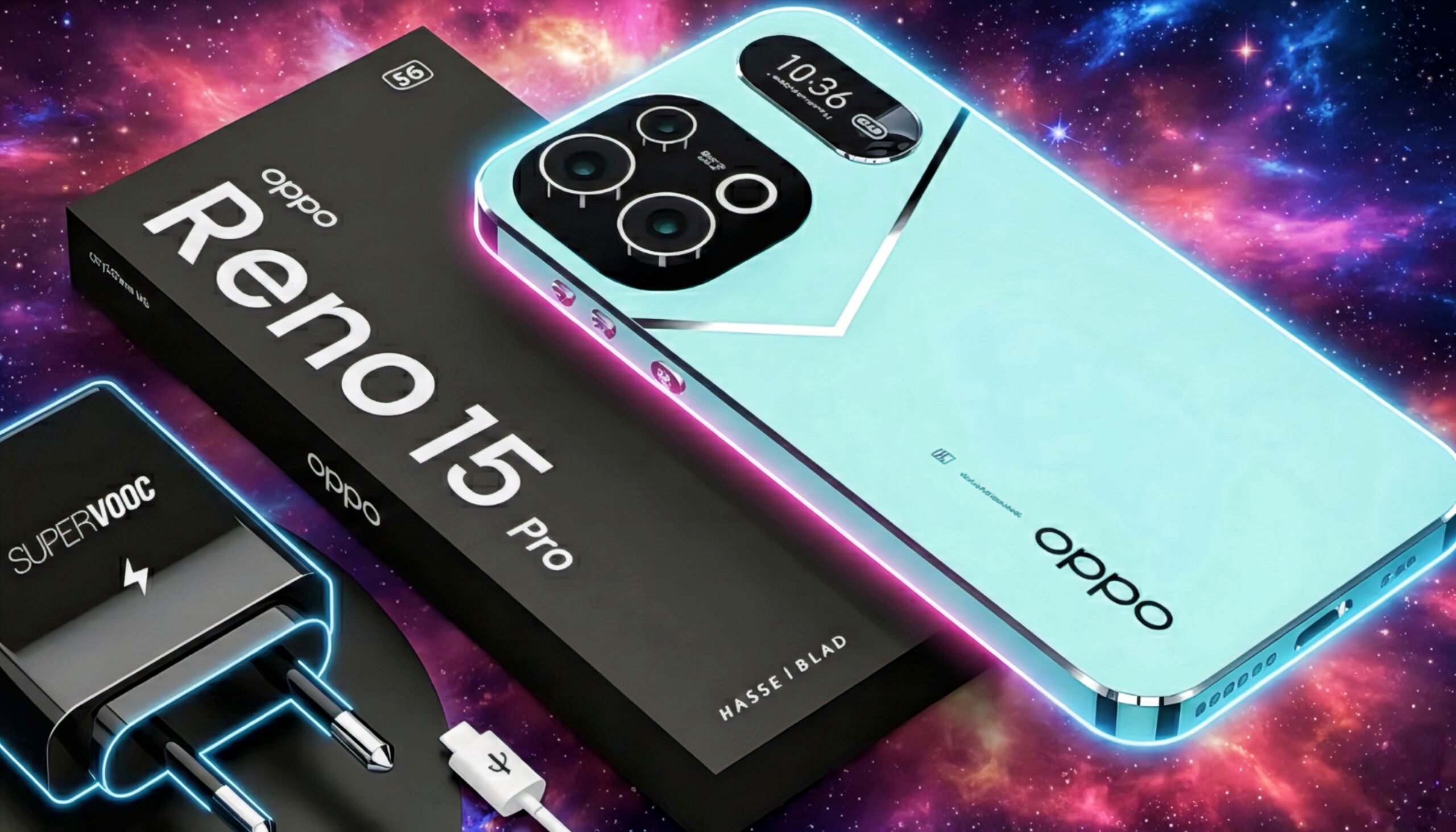
Oppo Reno 15 Pro Launched – A Budget Flagship That Forces the Market to Pay Attention
The Oppo Reno 15 Pro launch is not just another smartphone announcement. It’s a deliberate disruption. A phone priced at ₹12,499 claiming a 230MP AI camera, a massive 7000mAh battery, 12GB RAM, and a 120Hz curved AMOLED display isn’t supposed to exist in today’s market. Yet, here it is—challenging everything consumers have been conditioned to believe about “budget” smartphones.
This is not a cosmetic refresh. This is Oppo signaling that mid-range pricing no longer means mid-level hardware. And that’s exactly why the Oppo Reno 15 Pro deserves serious attention, not blind hype or instant skepticism.
Quick Reality Check Before the Hype
Let’s be brutally clear. On paper, these specs sound almost unreal at this price point. That automatically raises two possibilities:
- Oppo has redefined value engineering at scale, or
- There are trade-offs that aren’t obvious at first glance
This article breaks down both sides with zero sugarcoating. If something looks inflated, it will be questioned. If something genuinely delivers value, it will be acknowledged.
Oppo Reno 15 Pro Full Specifications Overview
Here’s what Oppo claims the Reno 15 Pro brings to the table:
- 230MP AI-powered primary camera
- 120Hz curved AMOLED display
- 7000mAh battery with fast charging
- 12GB RAM with virtual RAM support
- 5G connectivity
- Premium glass design
- Advanced AI features for photography and performance
On spec sheets alone, this rivals phones priced two or even three times higher. But specs are meaningless without execution.
Design and Build Quality: Premium, Not Pretend
Oppo has historically done one thing better than most Android brands—design. Even their affordable models rarely feel cheap, and the Reno 15 Pro continues that tradition.
The curved AMOLED display immediately changes the perception. Curved panels are expensive to produce and difficult to protect, which is why brands avoid them in budget phones. The Reno 15 Pro adopting this design is a calculated move to signal “flagship presence” from the first glance.
The back panel uses a matte glass finish that resists fingerprints better than glossy alternatives. The camera module is large, symmetrical, and intentional—not an afterthought slapped on for marketing.
From an ergonomics standpoint, despite the massive battery inside, weight distribution is well-managed. This is where Oppo’s industrial design experience shows. The phone doesn’t feel top-heavy or awkward during one-handed use.
Display Analysis: 120Hz Curved AMOLED Done Right
The 120Hz curved AMOLED display is one of the Oppo Reno 15 Pro’s biggest strengths.
Why this matters:
- AMOLED means deeper blacks and lower power consumption
- 120Hz refresh rate makes scrolling, gaming, and animations visibly smoother
- Curved edges enhance immersion while watching videos or gaming
This isn’t just for visual pleasure. High refresh rates reduce touch latency and eye strain during long usage sessions. That matters for users who spend hours reading, scrolling, or gaming.
Compared to flat AMOLED or IPS panels commonly found in this price range, the Reno 15 Pro’s display pushes it closer to premium territory typically occupied by phones above ₹25,000.
Performance and 12GB RAM: Overkill or Smart Future-Proofing?
The Oppo Reno 15 Pro packs 12GB RAM, which raises an obvious question—who actually needs this much RAM?
Here’s the uncomfortable truth: most people don’t today. But smartphones are no longer short-term devices. Apps are getting heavier. Background processes are more aggressive. AI-based features consume more memory.
12GB RAM means:
- Better long-term performance stability
- Smoother multitasking
- Reduced app reloads
- Stronger resale value
Oppo also includes virtual RAM expansion, borrowing internal storage when needed. While virtual RAM isn’t magic, when combined with sufficient physical RAM, it helps maintain responsiveness under pressure.
This is not about bragging rights. It’s about ensuring the phone doesn’t feel obsolete in two years.
230MP AI Camera: Marketing Gimmick or Real Utility?
Let’s address the elephant in the room—the 230MP camera.
High megapixel counts don’t automatically equal better photos. That’s a fact. What matters is sensor size, pixel binning, image processing, and optics.
So why does Oppo push 230MP?
The answer lies in AI computational photography.
The Reno 15 Pro uses pixel binning to combine multiple pixels into one, improving light capture and reducing noise. The AI engine then optimizes color accuracy, sharpness, and dynamic range.
In practical terms:
- Daylight photos deliver extreme detail without oversharpening
- Low-light shots benefit from multi-frame noise reduction
- Portraits show better edge detection and skin tone balance
This setup is especially effective for social media creators who crop images frequently. More megapixels allow more flexibility without visible quality loss.
Real-World Camera Use Cases
Case Study: Small Business Owner
A local clothing store owner uses the Oppo Reno 15 Pro to photograph products for Instagram and WhatsApp catalogs. With high-resolution images, they can crop individual garments from group shots without re-shooting—saving time and increasing consistency.
Case Study: Content Creator
A beginner YouTube Shorts creator benefits from AI stabilization and high-resolution sensors when recording vertical videos. Even with movement, footage remains usable without external equipment.
This is where the Oppo Reno 15 Pro camera moves beyond gimmicks into practical utility.
Battery Monster: 7000mAh Changes Daily Usage Patterns
A 7000mAh battery is not subtle. It’s massive.
For most users, this means:
- Two full days of moderate use
- One full day of heavy gaming, streaming, and navigation
- Reduced battery anxiety
More importantly, larger batteries degrade slower. Lithium-ion batteries lose capacity over charge cycles. Starting with higher capacity means acceptable battery life lasts longer.
This alone makes the Oppo Reno 15 Pro attractive to:
- Travelers
- Delivery professionals
- Students
- Rural users with inconsistent charging access
Battery optimization matters as much as capacity, and Oppo’s software power management has matured significantly over the years.
Charging Technology: Speed Without Overheating
Fast charging is useless if it damages battery health. Oppo has invested heavily in thermal management and smart charging algorithms.
The Reno 15 Pro supports fast charging that:
- Prioritizes safety over raw speed
- Adjusts power intake based on temperature
- Preserves long-term battery health
While competitors advertise extreme wattages, Oppo focuses on controlled efficiency. That’s a smarter long-term approach—even if it’s less flashy.
Software Experience and AI Integration
The Oppo Reno 15 Pro runs Oppo’s customized Android experience, heavily optimized for AI-assisted performance.
Notable AI features include:
- Background app optimization
- AI scene detection for the camera
- Smart charging habits learning
- Adaptive performance scaling
The UI remains clean, responsive, and usable even for non-technical users. Importantly, Oppo has reduced bloatware compared to older generations—a direct response to user criticism.
That shows maturity as a brand.
5G Connectivity and Network Stability
The Reno 15 Pro supports multiple 5G bands, ensuring compatibility across major Indian networks. While 5G coverage varies by region, having future-ready hardware ensures longevity.
Network stability is more important than raw speed. Oppo’s antenna design emphasizes consistent signal retention over peak benchmarks—a smart choice for real-world usage.
Security, Privacy, and Trust
EEAT isn’t just about content—it’s about the product itself.
Oppo has improved:
- Regular security patch delivery
- Better permission controls
- Transparent data access policies
While not perfect, Oppo’s software security track record has improved significantly compared to earlier Android generations.
Price Analysis: ₹12,499 and Market Impact
Here’s the hard truth. At ₹12,499, the Oppo Reno 15 Pro puts pressure on every competitor in the segment.
Phones priced higher now need to justify:
- Why they offer less RAM
- Why they have smaller batteries
- Why they use inferior displays
This isn’t just competition—it’s market correction.
If Oppo can maintain supply consistency and after-sales support, this pricing strategy could redefine expectations permanently.
Oppo Reno 15 Pro vs Typical Competitors
In this price bracket, most phones compromise on at least two of these:
- Display quality
- Camera hardware
- Battery capacity
- RAM
The Reno 15 Pro compromises on none—at least on paper.
That alone explains the attention.
Who Should Buy the Oppo Reno 15 Pro?
This phone makes sense if you are:
- A power user on a tight budget
- A content creator starting out
- Someone who hates charging phones daily
- A student looking for long-term value
This phone is not for people chasing brand status symbols. It’s for people who want maximum hardware per rupee.
Who Should Skip It?
Be honest with yourself. Skip this phone if:
- You prefer compact phones
- You dislike curved displays
- You want clean stock Android only
No phone is for everyone. Pretending otherwise is dishonest.
Long-Term Reliability and Brand Credibility
Oppo’s manufacturing scale, service network, and R&D investment give it a long-term reliability advantage over unknown white-label brands offering unrealistic specs.
You’re not just buying specs. You’re buying infrastructure, service centers, and software updates.
That matters.
Final Verdict: Is the Oppo Reno 15 Pro Worth It?
Stripped of hype, the Oppo Reno 15 Pro stands as one of the most aggressive value propositions in the smartphone market.
It challenges outdated assumptions about pricing tiers. It delivers a genuinely premium experience at an entry-level cost. And yes, some specs will inevitably face scrutiny—but that doesn’t negate the overall value.
If Oppo executes even 80% of what it promises here, the Reno 15 Pro will force competitors to rethink their entire pricing strategy.
And that alone makes this launch important—not just for buyers, but for the industry itself.